What is the Vulgate Bible?
The Vulgate Bible, specifically the Biblia Sacra Vulgata, represents a pivotal historical religious text. Numerous PDF versions are available online, offering access to its contents.
Historical Context of the Vulgate

The story of the Vulgate Bible is deeply intertwined with the late 4th-century Roman world. Prior to its emergence, the Bible was primarily accessible in Greek, Hebrew, and Aramaic – languages not widely understood by the common people in the Western Roman Empire. Various Latin translations existed, but they were often inconsistent in quality and interpretation, leading to confusion and disputes.
This linguistic barrier prompted Pope Damasus I to commission Jerome, a renowned scholar, to produce a standardized and accurate Latin translation. Jerome embarked on this monumental task around 382 AD, initially revising existing Latin versions. However, he soon realized the need to return to the original Hebrew and Greek texts for a more faithful rendering.
Jerome’s work wasn’t immediately embraced; his direct translation from the original languages challenged established interpretations. Despite initial resistance, the Vulgate gradually gained acceptance, becoming the standard Bible of the Western Church for over a millennium. The availability of Vulgate Bible PDFs today allows modern scholars and enthusiasts to explore this historically significant translation and its impact on religious thought and practice.
Jerome’s Translation and its Significance
Saint Jerome’s translation wasn’t merely a linguistic undertaking; it was a theological one. He prioritized accuracy to the original Hebrew, Aramaic, and Greek texts, often diverging from the Septuagint (Greek Old Testament) when he believed it inaccurate. This commitment to source fidelity was revolutionary, influencing biblical interpretation for centuries.
Jerome’s Vulgate wasn’t a single, monolithic work. It evolved over decades, with revisions and refinements. His translation of the Old Testament, based on Hebrew sources, differed significantly from earlier Latin versions. The New Testament revision was more straightforward, refining existing Latin texts.
The significance of the Vulgate lies in its standardization of biblical text for the Western Church. It became the textus receptus – the standard text – for centuries, shaping theology, liturgy, and art. Today, accessing Vulgate Bible PDFs allows researchers to study Jerome’s choices, understand the development of biblical translation, and appreciate its lasting legacy. The impact of his work continues to resonate within religious scholarship and practice.

Finding Vulgate Bible PDFs Online
Numerous online repositories offer Vulgate Bible PDFs for download. Websites like Folkscanomy and the Boston College Library Digital Collections provide access to digitized versions of this historic text.
Popular Websites for Downloading Vulgate PDFs
Several websites specialize in providing digitized religious texts, making Vulgate Bible PDFs readily accessible. Folkscanomy stands out as a prominent resource, offering a substantial collection of scanned books on faith, spirituality, and worship. Users can download the Biblia Sacra Vulgata in various formats, including PDF, Text, and even through torrents, with options for single-page processing or original scans.

The Boston College Library Digital Collections also presents a valuable source. While encompassing a broader range of materials – including banned books – it features digitized Vulgate texts available for download as PDFs, SCRIBE scandata ZIP files, and various processed image formats. These collections often include metadata and contextual information, enhancing the research experience.
Beyond these, Internet Archive and similar digital libraries frequently host digitized copies of older Bibles, including the Vulgate. Searching specifically for “Biblia Sacra Vulgata PDF” on these platforms yields numerous results. It’s important to note that download options and file formats can vary significantly between websites, so exploring multiple sources is recommended to find the version best suited to your needs.
Folkscanomy and its Vulgate Collection
Folkscanomy distinguishes itself as a dedicated repository for digitized books, prominently featuring a comprehensive collection of the Latin Vulgate Bible. The site offers multiple download options for the Biblia Sacra Vulgata, catering to diverse user preferences and technical capabilities. Users can choose between standard PDF downloads, single-page processed JP2 ZIP files for optimized viewing, and even torrent downloads for faster access to larger files.
The collection isn’t limited to a single format; it includes both original scans and processed versions, allowing researchers to examine the text in its raw, unaltered state or benefit from improved readability. Currently, Folkscanomy lists 15 downloadable files related to the Vulgate, with 6 being original scans. This variety ensures accessibility for different research needs.
Furthermore, Folkscanomy’s categorization within “Religious Texts – Bible” and “Folkscanomy: A Library of Books” simplifies navigation. The site’s focus on preserving and sharing scanned books makes it an invaluable resource for anyone seeking to study or access the Vulgate Bible in digital format.
Boston College Library Digital Collections
Boston College Library’s digital collections provide access to digitized materials, including resources related to the Vulgate Bible, though finding a complete, readily downloadable PDF of the entire Bible requires some navigation. The library participates in the Boston Library Consortium, and its digital offerings extend to historically significant and sometimes “banned books,” hinting at the Vulgate’s complex reception history.
Currently, the library lists one PDF file directly associated with the Vulgate, alongside various other formats like SCRIBE SCANDATA ZIP, single-page processed JP2 TAR, JPEG TAR, and raw JP2 TAR archives. These diverse formats cater to different research needs, offering options for both viewing and detailed analysis of the text.
Keyword searches reveal connections to related scholarly work, such as the forthcoming Handbook of the Vulgate Bible and Its Reception: A Bibliographical Guide, suggesting the library holds supporting materials. While a single, comprehensive PDF isn’t immediately apparent, the collection provides valuable resources for Vulgate scholarship.

Different Versions and Editions of the Vulgate PDF
Various Vulgate editions exist in PDF format, including the Clementine, Sixto-Clementine, and versions underpinning the Douay-Rheims Bible. Each offers unique textual variations and historical significance.
Clementine Vulgate
The Clementine Vulgate, formally known as the Biblia Sacra Vulgata, represents a standardized edition of the Latin Bible produced by Pope Clement VIII in 1592. This edition aimed to address textual inconsistencies that had accumulated in various Vulgate manuscripts over centuries of copying. It served as the official Roman Catholic Church’s standard text for over two centuries, profoundly influencing theological studies and biblical scholarship.
PDF versions of the Clementine Vulgate are readily available online through resources like Folkscanomy and various digital library collections. These digital copies allow researchers and enthusiasts to access a historically significant text with relative ease. The Clementine edition is characterized by its careful collation of existing manuscripts, striving for a reliable and consistent representation of Jerome’s original translation.
Notably, the Clementine Vulgate includes the traditional canon of biblical books recognized by the Catholic Church, encompassing both the protocanonical and deuterocanonical books. Its widespread adoption solidified its place as a cornerstone of Western Christian tradition, and its digital availability ensures continued access for generations to come. Finding a quality PDF copy is crucial for accurate study.
Sixto-Clementine Vulgate
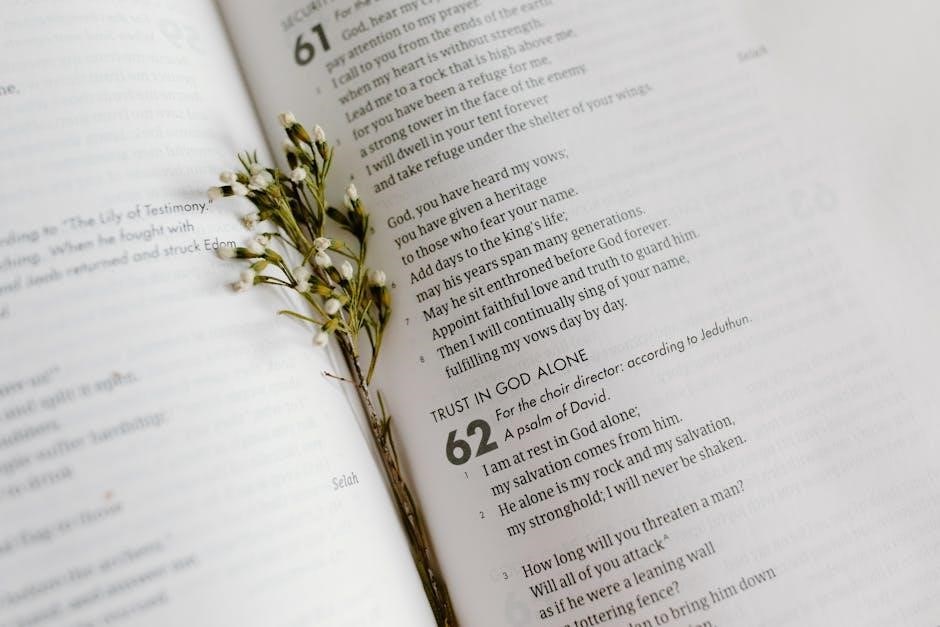
The Sixto-Clementine Vulgate, published between 1589 and 1590 under Pope Sixtus V and Clement VIII, represents a further refinement of the Clementine Vulgate. While the Clementine edition was a significant step, scholars identified areas for improvement, leading to the Sixto-Clementine revision. This edition aimed for even greater accuracy and consistency in the text, addressing minor errors and ambiguities present in the earlier version.
PDFs of the Sixto-Clementine Vulgate are widely accessible online, often found within digital library archives like those maintained by Boston College. These digital versions provide researchers with a highly regarded and meticulously edited text for scholarly pursuits. The Sixto-Clementine edition became the standard for the Catholic Church and remained so for an extended period.
A key feature of this Vulgate is its inclusion of critical apparatus, offering variant readings from different manuscripts. This allows for deeper textual analysis and understanding of the Vulgate’s development. Its availability in PDF format facilitates convenient study and comparison with other biblical versions, solidifying its importance in biblical scholarship and historical research.
Douay-Rheims Bible (Based on the Vulgate)
The Douay-Rheims Bible, completed in the late 16th and early 17th centuries, holds a unique position as the primary English translation directly based on the Latin Vulgate, rather than the original Hebrew, Aramaic, and Greek texts. This translation was undertaken by Catholic scholars in exile, aiming to provide English-speaking Catholics with a faithful rendering of Scripture.
PDF versions of the Douay-Rheims Bible are readily available, offering a glimpse into the English of the Elizabethan era while providing access to a Vulgate-derived biblical text. It’s important to note that the Douay-Rheims reflects the theological perspectives and linguistic conventions of its time.
While modern English translations often prioritize accuracy to the original languages, the Douay-Rheims remains significant for its historical importance and its connection to the Vulgate tradition. Studying its PDF format allows researchers to compare it with the Latin source and understand the translation choices made by its creators, offering valuable insights into the history of biblical translation and Catholic theology.

Understanding the Contents of a Vulgate Bible PDF
A Vulgate Bible PDF contains both Old and New Testament books, including the Deutero-Canonical texts (Apocrypha). These digital versions mirror the traditional biblical structure.
Old Testament Books in the Vulgate
The Old Testament section within a Vulgate Bible PDF meticulously follows the traditional order established during Jerome’s translation, though variations exist between editions. Generally, it begins with Genesis, detailing creation and the early history of humanity, progressing through the historical books like Exodus, Leviticus, Numbers, and Deuteronomy, outlining the laws and covenant with Israel.
Following these are the books of Joshua, Judges, Ruth, and the historical narratives of Samuel and Kings, chronicling the Israelite monarchy. The poetic and wisdom literature, including Psalms, Proverbs, Job, Ecclesiastes (Koheleth), and the Song of Songs, offer profound reflections on life, faith, and human experience. Prophetic books, such as Isaiah, Jeremiah, Ezekiel, Daniel, and the twelve minor prophets (Hosea, Joel, Amos, Obadiah, Jonah, Micah, Nahum, Habakkuk, Zephaniah, Haggai, Zechariah, and Malachi), deliver divine messages and warnings.
Crucially, the Vulgate’s Old Testament often includes the Deutero-Canonical books – Tobit, Judith, Wisdom, Sirach, Baruch, and 1 & 2 Maccabees – which are considered canonical by Catholics and Orthodox Christians but are often categorized as Apocrypha by Protestants. Accessing a Vulgate Bible PDF allows for direct comparison and study of these differing canons.
New Testament Books in the Vulgate

A Vulgate Bible PDF’s New Testament section presents the core texts of Christian faith, mirroring the canonical order established centuries ago. It commences with the four Gospels – Matthew, Mark, Luke, and John – narrating the life, teachings, death, and resurrection of Jesus Christ. Following the Gospels is the Acts of the Apostles, detailing the early Church’s growth and spread of the Gospel.
The Pauline Epistles, comprising letters attributed to the Apostle Paul (Romans, 1 & 2 Corinthians, Galatians, Ephesians, Philippians, Colossians, 1 & 2 Thessalonians, 1 & 2 Timothy, Titus, and Philemon), offer theological instruction and guidance to early Christian communities. The General Epistles – Hebrews, James, 1 & 2 Peter, 1, 2 & 3 John, and Jude – provide further teachings and exhortations.
Concluding the New Testament is the Book of Revelation, a prophetic and apocalyptic vision of the end times. Examining a Vulgate Bible PDF reveals the Latin phrasing of these familiar texts, offering a unique perspective for theological study and linguistic analysis. Different editions may exhibit minor textual variations.
Deutero-Canonical Books (Apocrypha)
A Vulgate Bible PDF often includes the Deutero-Canonical books, also known as the Apocrypha, which are a point of divergence between Catholic and Protestant biblical canons. These books, present in the Latin Vulgate tradition, are not universally accepted as scripture in all Christian denominations.
Notable examples include Tobit, Judith, Wisdom of Solomon, Sirach (Ecclesiasticus), Baruch, and 1 & 2 Maccabees. Within the Old Testament section of the Vulgate PDF, these texts offer historical narratives, moral teachings, and poetic reflections. Additions to Daniel and Esther are also commonly found.
The inclusion of these books reflects the broader scope of the Old Testament as recognized by the Catholic Church. Studying a Vulgate Bible PDF allows researchers to compare and contrast these texts with their counterparts in other biblical traditions, understanding the historical and theological context surrounding their canonization. Accessing these texts digitally facilitates comparative analysis.

Tools and Resources for Studying the Vulgate PDF
Latin dictionaries and interlinear Bibles are crucial for understanding a Vulgate Bible PDF. Commentaries provide deeper insights into the text’s historical context.
Latin Dictionaries and Grammars
Successfully navigating a Vulgate Bible PDF necessitates robust Latin language resources. Given that the Vulgate is a Latin translation, a strong grasp of the language is paramount for accurate interpretation. Several excellent Latin dictionaries are available, both in print and online.
Lewis and Short’s A Latin Dictionary remains a standard reference work, offering comprehensive coverage of Latin vocabulary and grammar. Online resources like Whitaker’s Words provide morphological analysis, helping to break down Latin words into their component parts. For grammatical understanding, works such as Allen and Greenough’s New Latin Grammar are invaluable.

These resources assist in deciphering the nuances of Jerome’s Latin, which differs from Classical Latin in certain respects. Understanding the specific grammatical constructions and vocabulary choices employed in the Vulgate is crucial for avoiding misinterpretations. Furthermore, familiarity with Latin syntax allows for a more fluid and accurate reading of the text within the Vulgate Bible PDF, unlocking a deeper appreciation for its theological and historical significance.
Interlinear Vulgate Bibles
For those approaching a Vulgate Bible PDF without extensive Latin proficiency, interlinear Bibles are exceptionally helpful tools. These editions present the Latin text alongside an English translation, typically word-for-word, on facing or alternating lines. This format allows readers to directly compare the original Latin with its English equivalent, facilitating comprehension and vocabulary acquisition.
Several interlinear Vulgate Bibles are available, both in print and increasingly as digital resources compatible with PDF viewing. They are particularly useful for studying the grammatical structure of the Latin text and understanding Jerome’s translation choices. While not a substitute for dedicated Latin study, interlinears provide a valuable bridge for those seeking to engage with the Vulgate in its original language.
These resources enable a more nuanced understanding than relying solely on English translations based on the Vulgate, revealing subtleties often lost in translation. Utilizing an interlinear alongside a Latin dictionary enhances the learning experience and deepens engagement with the historical text.
Commentaries on the Vulgate
Studying a Vulgate Bible PDF benefits greatly from accompanying commentaries. These resources provide historical context, linguistic analysis, and theological interpretations of the text, enriching understanding beyond a simple reading. Commentaries address Jerome’s translation techniques, the textual history of the Vulgate, and its influence on subsequent biblical translations.
Finding comprehensive commentaries specifically focused on the Vulgate can be challenging, but valuable resources exist. Scholarly works often dedicate sections to analyzing the Vulgate’s unique characteristics and its divergence from the original Hebrew and Greek texts. Accessing these commentaries, often available in digital formats alongside PDF versions of the Vulgate itself, is crucial for in-depth study.
Furthermore, understanding the reception history of the Vulgate – how it was interpreted and used throughout the centuries – is illuminated by dedicated commentaries. These resources provide a broader perspective, connecting the text to its historical and theological milieu, enhancing the overall study experience.